New Patients Welcome!



Flossing is an important part of your oral care routine; however, many people wonder how often they should floss to keep their teeth and gums healthy. It’s one of those habits that’s so easy to ignore, but it plays a major role in preventing cavities, gum disease, and bad breath. Flossing cleans plaque and food debris from between your teeth, where a toothbrush may not reach.
Flossing also prevents plaque from turning into tartar. Tartar buildup is associated with gum disease and, if left untreated, tooth loss. Ever wondered how many times you should floss in a day? In this blog, we’ll walk you through the best flossing practices and how often you should floss to keep your teeth healthy.
How Often Should You Floss?
People commonly ask, “How often to floss?” You should floss at least once a day, according to most dental professionals. Although some people floss several times a day, unless your dentist instructed you to do so, it is not generally required. The best time to floss is at night, before brushing, as it removes the food particles, or plaque, you’ve accumulated during the day. That means you’re going to sleep with a clean mouth and wake up ready for the day, with fresh breath and healthy gums.
Increased flossing frequency may be recommended for people with specific dental needs, such as gum disease or braces. Your dentist in Ventura can advise you on how frequently to floss based on your physical needs, but here are some general guidelines to keep you informed.
Why Is Flossing Important?
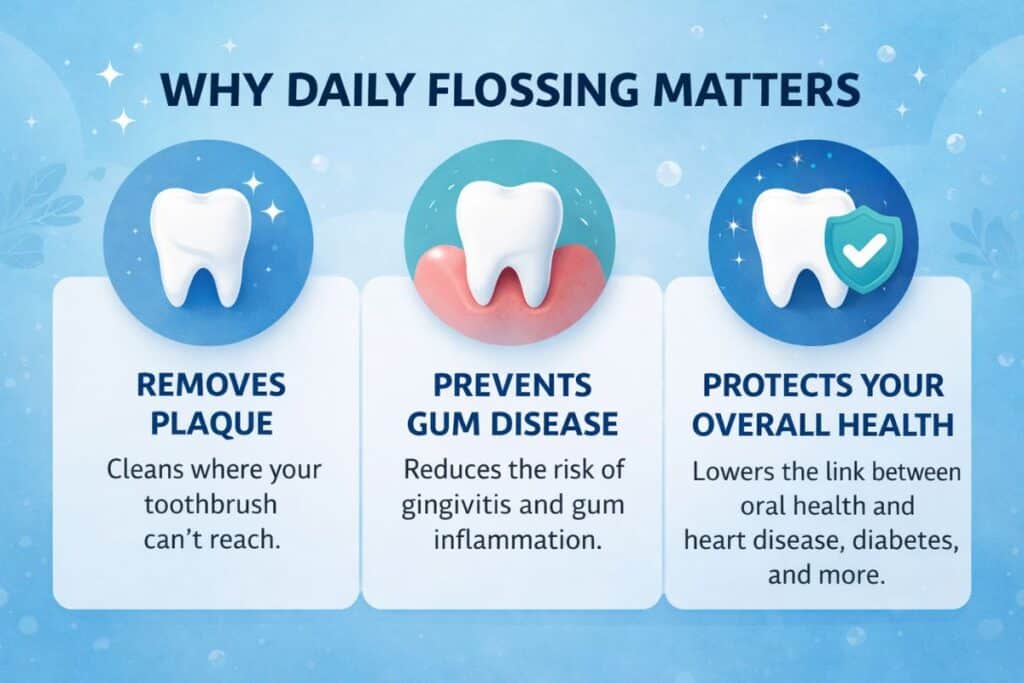
Flossing refers to the practice of using a thin piece of string, known as dental floss, to clean between your teeth and underneath your gumline. This also helps eliminate plaque and food particles that may gather in tight spaces between your teeth. Plaque that’s not removed regularly can develop into tartar, which must be cleaned out by a dental professional.
Flossing becomes even more important for those who wear braces or other dental appliances, as food can get stuck in these devices. Braces make it more challenging to clean every nook and cranny, and when flossing is not performed regularly, plaque can accumulate on teeth, leading to tooth decay or gum irritation.
How to Floss Teeth?
If you want to floss properly, make sure you clean the surface and the area near the gums. Here’s an easy guide for how to floss:
- Take a piece of dental floss roughly 18 inches long and wrap the ends around your fingers, leaving a few inches between them.
- Move the floss back and forth to gently guide it between your teeth.
- Guide the floss around the base of each tooth, bringing it under the gumline.
- Continue this for each tooth, using a clean section of floss each time.
How Often Should You Floss Every Day?
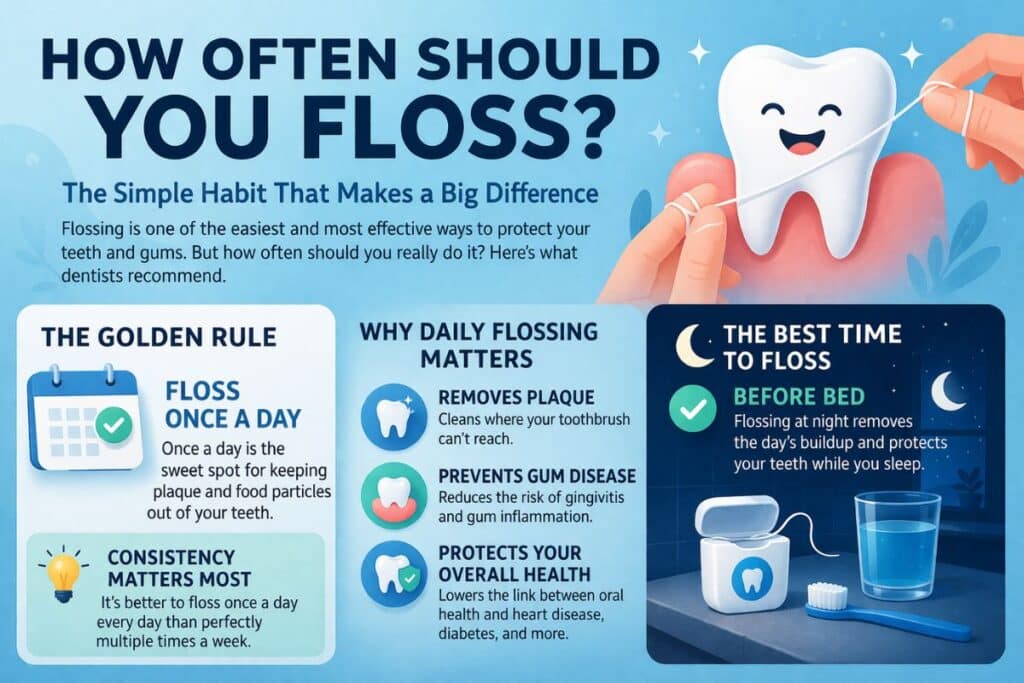
Once a day is recommended, but you may want to floss more often in some scenarios. If you have braces or other dental appliances, use floss after each meal to eliminate any food trapped in your braces. While flossing nightly is enough for the average person, if you visit your dentist in Ventura and have special oral health needs, they may recommend a different routine.
How to Floss with Braces?
Flossing with braces can seem intimidating, but it’s crucial to keep your mouth clean and healthy during orthodontic treatment. Here’s how to do it:
- Use a floss threader to go in between the braces under the archwire.
- Carefully work the floss between each tooth and beneath the gumline.
- Use the up-and-down motion to clean both sides of each tooth, rinsing plaque and food particles away.
- You might try a water flosser or an interproximal brush to make cleaning easier.
How to Use a Waterpik?
A waterpik or water flosser can be a good tool for those who have difficulty using traditional floss or are simply looking for an alternative to string floss. It works by spraying a stream of water between your teeth, helping eliminate plaque and other debris. Here’s how to use it:
- Add warm water to the Waterpik reservoir.
- Place the tip of the device in your mouth and direct it toward the gumline.
- Switch it on at its lowest pressure setting and glide the water flosser along your gumline and between your teeth.
- When using the device, continue for about 1 to 2 minutes.
How to Use a Water Flosser?
People with braces and people with sensitive gums often prefer water flossers. A water flosser should reach deeper below the gumline than traditional floss and is often more comfortable to use. It’s especially good for cleaning around dental work, such as implants or bridges. Using a water flosser regularly as an adjunct to manual brushing helps to keep the mouth clean and reduce gum disease.
Flossing for Healthier Teeth and Gums
Maintaining good oral hygiene involves more than just brushing your teeth; it also requires flossing regularly to help prevent plaque and food buildup between the teeth. If you have braces or other dental appliances, consider flossing more frequently or using a water flosser to make the process easier.
If you are not sure about how to floss, or if you’re wondering how to floss properly with braces, contact us today at The Smile Shapers – Dentist Ventura. Keep in mind that flossing correctly prevents not only cavities from forming but also helps keep your gums healthy, an important part of long-term oral health.
Questions People Ask About Flossing
How often should I floss?
Floss at least once a day, preferably at night. This removes plaque and food particles that brushing misses, helping prevent cavities and gum disease for healthier teeth and gums.
Can I floss after every meal?
While not necessary, flossing after meals can be helpful if you have braces or if food frequently gets stuck between your teeth. It helps keep your mouth clean and reduces plaque buildup.
What is the best way to floss with braces?
Use a floss threader or special orthodontic floss to guide floss between your teeth and beneath the braces’ wires. It effectively removes food and plaque buildup around brackets, improving oral hygiene.
How does a waterpik work?
A waterpik uses a stream of pulsating water to clean between your teeth and along the gumline. It effectively removes plaque and debris, especially around braces or dental work, without irritation.
Is flossing with a water flosser as effective as string floss?
A water flosser can be just as effective, especially for those with braces, implants, or sensitive gums. It removes plaque and food debris, improving gum health and overall cleanliness.
What happens if I don’t floss regularly?
Not flossing can lead to plaque buildup, which causes cavities, gum disease, and bad breath. Regular flossing is essential for preventing these issues and maintaining long-term oral health.